
Arrest Warrants in Ingham County
An arrest warrant is a judge's command to a peace officer. Arrest this person, it says, and bring them before the court without unnecessary delay. A judge or magistrate in Ingham County signs it after reading a sworn complaint or affidavit that describes the offense. The standard is probable cause. That means the judge found enough reason in the papers to believe an offense happened and that this person committed it. Warrants arrive with different terms. Some set bond in advance. Others leave it to the first appearance, and your paperwork tells you which.
MCL 764.1b and Ingham Arrest Warrants
Michigan's arrest-warrant statute, MCL 764.1b, gives the document four jobs. It recites the accusation. It is directed to a peace officer. It commands that the person be arrested and brought before the magistrate without unnecessary delay, and it must be returned to the magistrate once the arrest happens. A return is the officer's written account of how the warrant was carried out, and it closes the loop between the issuing court and the agency that served the paper. Ingham County judges write warrants to this pattern. The text of MCL 764.1b spells out each of the four requirements in the official statute.
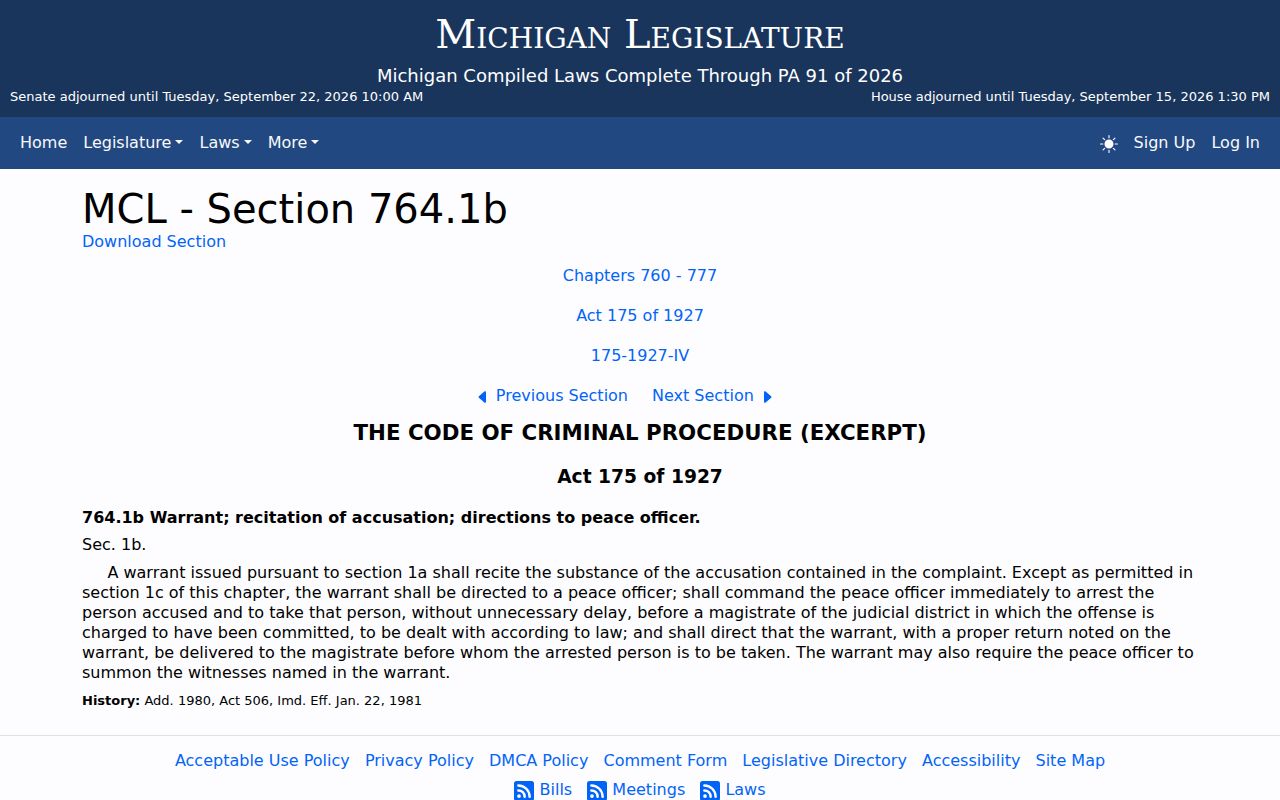
The statute is the floor for what an Ingham County warrant commands.
What an Ingham County Arrest Warrant Contains
The paper is shorter than people expect. An Ingham County arrest warrant identifies the case, the person, and the accusation, and it hands an officer the authority to act.
| Warrant or Case Number | The court's file identifier. The 30th Circuit payment search describes the shape as YY-XXXXXX-CCC. |
|---|---|
| Named Subject | The person the order authorizes an officer to arrest. |
| Charge or Offense | The accusation the affidavit supports. |
| Issuing Court | The court that signed the order and holds the file. |
| Issuing Judge or Magistrate | The judicial officer who reviewed the affidavit. |
| Bond or Bail | Any amount set in advance. Many leave it for the first appearance. |
| Date Issued | When the order took effect. |
| Status | Open, served, recalled, or quashed. Only the court confirms this. |
Ingham County Arrest Warrant Court Path
A misdemeanor arrest warrant stays in District Court the whole way. Felonies start there too. The District Court arraigns the person, sets or reviews bond, and holds a preliminary examination to decide whether the case moves up. If it does, the 30th Judicial Circuit Court of Ingham County takes over for trial. The case number changes with the move. That is why one name search can surface two files for a single event. So ask which Ingham County court holds the case today. The 55th, 54-A, and 54-B handle the early stage, and the Circuit Clerk keeps what comes after.
How Ingham County Arrest Warrants Are Served
Serving a warrant means making the arrest. Until then, the order simply sits open. Any authorized officer in Ingham County can act on it, whether a sheriff's deputy, a city police officer, or an officer who meets the person during routine work. Most arrests grow out of ordinary contact rather than a planned visit. A traffic stop will do it. So can a call at a front door or a booking on some other matter. Two cautions are worth keeping. An old Ingham County warrant does not expire on its own. And steering clear of police never resolves one; the court can. After booking, a magistrate states the charge and sets bond.
Sheriff, City Police, and the Court
The work in Ingham County is divided. The Sheriff's Office makes arrests and keeps its own agency records. City police do the same inside their cities, while the courts hold the case files and the warrant status.
Ingham County Sheriff's Office
517-676-8224 Central Records · agency records and public-records requests, not warrant status
55th District Court, Criminal Division
517-676-8405 · 700 Buhl Street, Mason · cases outside Lansing and East Lansing
30th Circuit Court Clerk
517-483-6500 ext. 6816 · 313 W Kalamazoo Street, Lansing · felony and family files
The Ingham County Sheriff posts no public warrant list. Central Records offers records services rather than warrant lookups, so ask the issuing court about the warrant and the agency only about its own record.
Arrest Warrant vs Summons vs Bench Warrant
Ingham County courts use three separate tools. An arrest warrant authorizes custody at once, a summons orders an appearance without arrest, and a bench warrant comes out of a case already open.
| Feature | Arrest Warrant | Summons | Bench Warrant |
|---|---|---|---|
| What It Orders | Arrest and production | An appearance on your own | Arrest for a missed obligation |
| Basis | Probable cause of an offense | A charge that does not need custody | Failure to appear or comply |
| Who Issues It | A judge or magistrate | The court or a charging officer | The judge handling the case |
| How to Respond | Surrender, bond, or counsel | Show up on the date | Request recall or appear |
Prosecutors often pick a summons for a first, nonviolent charge. It spares the person a custodial arrest. A bench warrant is the court's own follow-up in Ingham County; see bench warrants for the recall process.
Federal Warrants Near Ingham County
Not every warrant around Lansing traces to a state court. Ingham County sits inside the Western District of Michigan. Federal judges there issue arrest warrants on federal charges. Those warrants never appear in the 55th report or in state court records. PACER holds the federal dockets, and the U.S. Marshals Service enforces federal warrants. Some are sealed, so a docket search can come back empty even when a warrant exists.
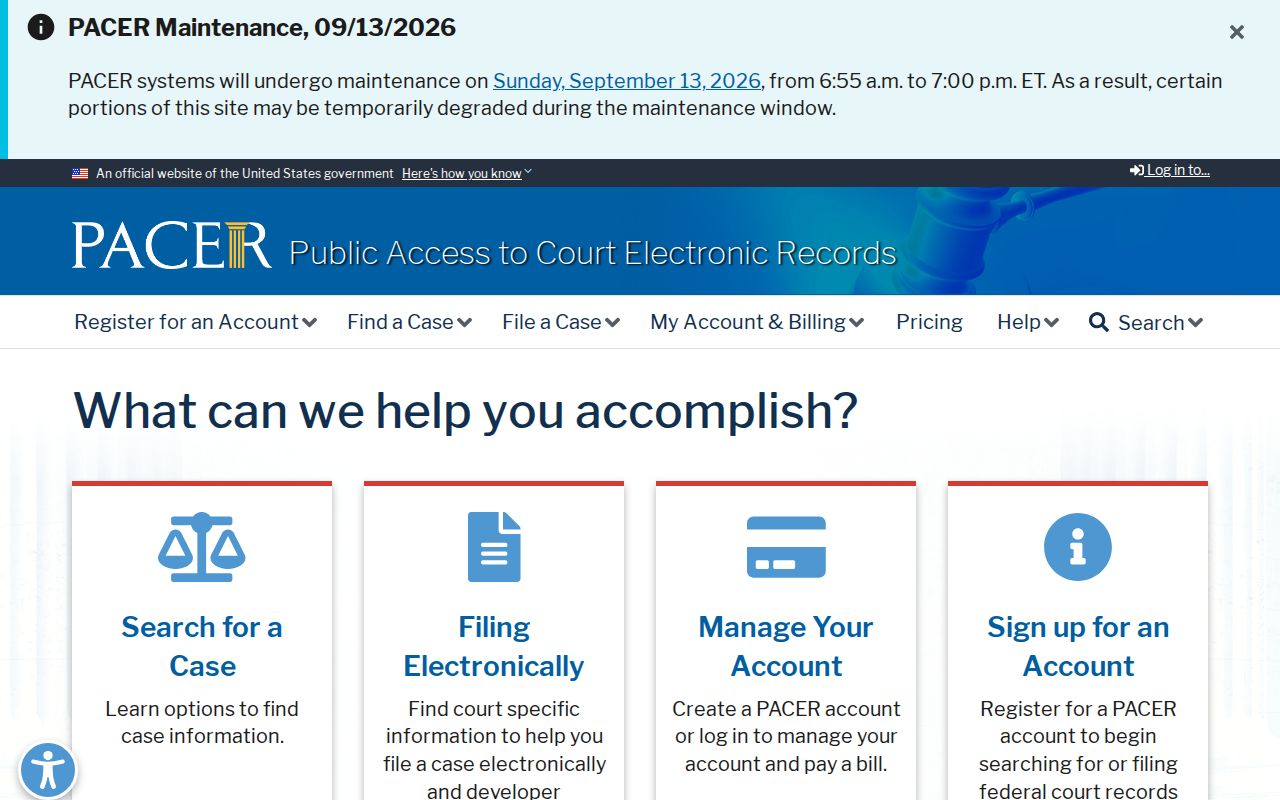
A federal charge changes the map. State records in Ingham County will not answer it, so a federal attorney or the district Clerk's Office is the right starting point.
Why No Ingham Warrant Search Is Final
An empty result is the most misread outcome of any Ingham County warrant search. Michigan keeps no single public warrant database. A miss usually means the record was never in the tool you used. Several categories stay out of public view, including juvenile records restricted under MCL 712A.28 and sealed or nonpublic cases that never display at all. No better search box fixes that. The answer comes from a call to the Ingham County court that would hold the case.
- Identify the city where the charge arose, which points to the court.
- Call that court's criminal division and ask whether a case exists under the full legal name.
- Ask what the court needs before confirming a status by phone.
What to Do If There Is a Warrant for You
A confirmed warrant in Ingham County leaves you with a few lawful options. You can surrender on a schedule the court sets. You can post bond, if the judge allows it. Or you can have a lawyer ask the issuing court to recall or quash the warrant. Turning yourself in tends to sit better with a judge than being picked up at a traffic stop, though it still means custody and a bond hearing. An attorney can find out the bond amount and the court date ahead of time.
Important: Talk to an attorney before turning yourself in. An open arrest warrant can be executed at any police contact.
Ask the Ingham County clerk what ID to bring and which door to use. The county overview gathers the ways to resolve it.